

A portion of this was also featured in The Center for Action and Contemplation’s Daily Meditations email, which you can find here. This is an excerpt from my book, Queering Contemplation: Finding Queerness in the Roots and Future of Contemplative Spirituality, you can order the book here.
The desert monastics of third- and fourth-century Christianity were some of the original weirdos of the faith. They were monks and ascetics who chose the desert, desiring to be disconnected from the comforts and distractions of everyday life while also embracing the peculiar gifts of desert experience. The desert was a place of less interruption where one could examine the self and step toward the Divine. The desert monastics chose their solitary yet communal lives of prayer, solitude, work, reading, and meditation as daily rhythmic encounters with the Divine and the deepest truths of themselves. Their participation in community was a constant reminder of their innate belonging.
Though the desert may be dry, even for monastics it can also a place of infinite tears. “Tears,” writes Christine Valters Paintner, “are an essential element of the monastic way.” Tears reveal the ways we’ve peeled back the layers of life to the reality of ourselves and the world around us. Tears show us how we’ve stepped away from ourselves, the Divine, and our inherent connection to all that surrounds us. Tears remind us that the only way to hold anything is with the spaciousness of open hands, with the tenderness of an open heart, and with the delight of the present moment—knowing it can be swept away at any time.
If you’ve ever been disoriented by an unexpected event, lost someone you’ve loved, or been heartbroken, you’ve been in the desert. If you’ve ever been so grief-ridden that you froze as you looked at the day or moment before you, you’ve been in the desert. The desert is where we find ourselves hollow, barren. It’s where nothing makes sense, where a sudden emptiness haunts us for the journey ahead.
But remembering the desert’s innate queerness means recalling the fecundity that can also be found there. Noticing the desert’s queerness means glancing up from the arid earth to see the way out—not as a means of escape, but to recall that the barrenness isn’t forever, the desolation won’t consume us. When we bring a queer lens to the deserts of our lives, we remove our masks and disguises to explore our raw vulnerability as part of the truth of who we are. Only then can we sink our roots of resil- iency and compassion through the cracks in the dry ground to commune with others who have felt the same gaping emptiness.
Sometimes we choose the desert. But more often the desert chooses us. In those unchosen moments, we may know how we got to the desert or even participated in our own arrival; other times we just end up there. And though we know that the desert places have plenty to teach us, we often still resist the lessons only found in the empty and barren landscapes of loss.
Joan Didion’s The Year of Magical Thinking recounts the ways her husband’s passing left imprints on every aspect of her life. When a loved one dies, routines must shift, the brain must retrain itself, and the body must let go of the physical presence of the one we most long for even as we carry memories of them everywhere.
In the days of the early Christian monastics, pilgrims living elsewhere who were feeling lost in their daily lives would travel long distances to seek the wisdom found in the desert. I imagine the camaraderie of those pilgrims, walking in the aimless agony of their own experiences of heartache, grief, and loss. From their interior deserts, these pilgrims would travel to the physical desert to beg the monastics for wisdom. “Teacher, give me a word,” they’d implore—a word of life! Yet these words of life seem sparse, and often only carry us a singular step through the endless labyrinth of grief.
Deserts are the places of unknowing while longing for answers; spaces of tending to one’s wounds while continuing to peel back the scab, just to remember, see, try to understand, or reminisce. Sometimes tending to those wounds means under- standing our own participation in them. And during the long, desolate walk, sometimes the words of life are enough for the next steps of the journey; other times the next steps meet an old memory, like a shard of broken glass that tumbled across the floor and missed the broom, sinking into our foot and opening us up once again. Looking for a word of life—a word of survival, an oasis of hope—is natural in these moments. The unchosen desert of grief is an emptiness and boundlessness of wondering if there is ever going to be a way out; it is a place where little makes sense and nothing feels like it will get better. A place where every outstretched fingertip of the griever is absent of our deepest longing, making the descent into darkness a long, slow wander with only the stars to follow.
Sometimes desert conditions invite us to strip ourselves of all that is unnecessary and all that hinders us from forging ahead: the pieces of ourselves that have harmed us or others; the old stories, projections, defenses; the parts of ourselves we’ve given to others; the woundedness that can make us show up in harmful and hurtful ways. The desert distills us into the absolute rawness of who we are and asks us who we want to be. The desert will always find a way to reveal the core of our humanity, in all its naked vulnerability. And we must live through the desert moments in order to survive. The words of life get us to the next day. The chosen and unchosen deserts must be crossed.
But the desert also invites us to remain and feel, to be still, root, grow, heal, and understand. And as the desert monastics suggest, the only way through the deserts of life is to remain in the practice of examining the self, to stay in the Divine’s presence as we unveil ourselves, to truly see and be seen. For me, in a very practical sense, these desert moments have led me to increasing my therapy, seeking the support of friends, and engaging in practices and routines to better care for my inner world. It has meant creating new habits, mindful and silent meditation sits, spending less time on social media, and walking miles and miles, in hopes that the Latin phrase solvitur ambulando—“it is solved by walking”—is true.
But what do these unchosen deserts lead us into? What can we ever expect to get out of such pain?
Some of my desert experiences have brought me close to my most raw, most exposed, and seemingly emptiest self. Yet that is also my most real self. But not all desert experiences are this revealing. Other times the desert gives us nothing as we trudge through the pain. For some, the desert experiences feel more like a dark night of the soul—a kind of crisis of faith. But all these desert experiences have one thing in common: they shoot our roots of humanness down into the ground, where they extend to connect us to everyone else who has ever felt these things. The desert awakens us to the truth of the full human experience, in all its pain, nakedness, and depth.
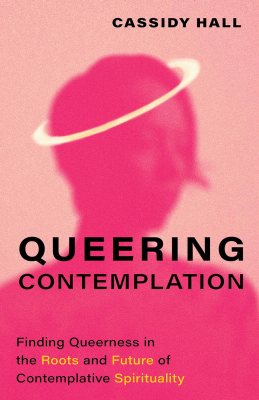
This is an excerpt from my book, Queering Contemplation: Finding Queerness in the Roots and Future of Contemplative Spirituality, you can order the book here.


 Dr. Cassidy Hall, DMin, MDiv, MTS, MA
Leave a comment